
How to Help Kids Enjoy Reading Again: Rethinking Book Reports
Somewhere along the way, book reports stopped being about reading.
They became worksheets, rigid formats, and pressure-filled assignments focused more on performance than understanding. For many children especially reluctant readers this is where reading began to feel like work instead of wonder.
At 18 August Ave, we believe it doesn't have to be this way. Book reports can still exist, but they should invite curiosity, conversation, and connection not stress.
Why Traditional Book Reports Don't Work Anymore
Traditional book reports often ask children to:
Recall every detail
Identify a "correct" theme
Write responses that don't sound like how they think or speak
For many kids, this turns reading into a test instead of an experience.
The goal shouldn't be proving a child read the book. The goal should be understanding how the book landed with them.
When reading becomes performative, children disengage. When it becomes relational, they lean in.
How Conversation Builds Reading Comprehension
Reading doesn't end on the last page. The most important part happens afterward when children reflect, question, and connect ideas to their own lives. This is where comprehension deepens.
Instead of asking "What happened in the story?" try:
"Which part stayed with you the longest?"
"Who did you relate to most?"
"Did anything surprise or confuse you?"
"What would you ask the main character if you could?"
These questions don't feel like homework. They feel like real dialogue. And real dialogue is how children learn to organize thoughts, express opinions, and build confidence as readers.
Simple Ways Parents Can Support Reading at Home
You don't need to be a reading expert to support literacy.
You don't need to have read every book.
You don't need to know the "right" answers.
You don't need to turn reading into a lesson.
What children need most is presence. Make space for imperfect thoughts.
When children feel heard, they engage more deeply. When reading feels relational, they return to it willingly.
Making Book Reports Engaging for Reluctant Readers
Book reports don't have to be written to be meaningful.
They can look like:
A short bedtime conversation
A drawing of a favorite scene
A voice memo reflection*
Acting out a moment from the book
Connecting the story to real-life experiences
a quick discussion during the morning commute/ or train ride.
The format matters less than the engagement.
When children respond creatively, reading becomes something they participate in—not something done to them.
Strong readers aren't just fluent, they're thoughtful.
Children who regularly talk about books:
Build comprehension and critical thinking skills
Develop emotional vocabulary
Learn to express opinions
Begin to see reading as something that belongs to them
So yes, let's bring back the book report. Let's make it conversational. Let's make it something kids actually look forward to. Because when reading feels good, children keep reading.
18 August Ave Favorites to support your next book report
Picture Books (Ages 3–7)
Hello There, Sunshine: A Children’s Storybook Adventure — joyful and bright.
A City Dream: An Enchanting Tale for Young Dreamers — whimsical stories to spark wonder.
Becoming a Ballerina: The Story of Michaela DePrince — inspiring real-life story.
My Quiet Place — gentle exploration of calm and reflection.
Reading Beauty — a picture book that celebrates reading and imagination.
Harlem at Four — layered picture book with cultural and historical richness.
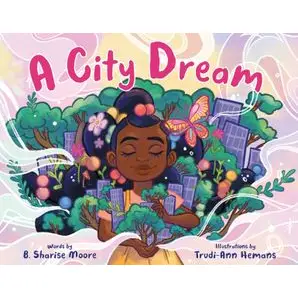
Introduce your child to a world where dreams take flight amidst the cityscape in "A City Dream." This enchanting picture book inspires young imaginations with beautifully vivid illustrations and a heartfelt narrative by B. Sharise Moore.
Beautifully illustrated, captivating story and art by Trudi-Ann Hemans.
Encourages imagination and dreams in urban settings.
Suitable for young readers and inclusive for BIPOC communities.
"A City Dream" serves as a gateway to imaginative journeys and meaningful discussions, making bedtime stories memorable and bonding moments richer.
Early Reader & Middle Grade Picks (Ages 7–12)
Red, White, and Whole — a novel in verse about identity, family, and strength.
Space for Everyone— celebrates belonging and curiosity.
Black Girl Unlimited: The Remarkable Story of a Teenage Wizard — middle grade fantasy with heart.
New Kid (Graphic Novel) — story about school, belonging, and self-discovery.

Now in paperback, this Newbery Honor– and Walter Award–winning novel in verse is a heartbreakingly hopeful story about an Indian American girl whose life is turned upside down when her mother is diagnosed with leukemia.
Reha feels torn between two worlds: school, where she’s the only Indian American student, and home, with her family and their close-knit community. But Reha’s parents don’t understand why she’s conflicted—they only notice when Reha doesn’t meet their strict expectations. Reha feels especially disconnected from her mother, or Amma.
Then Reha finds out that Amma is sick. Really sick.
Reha, who dreams of becoming a doctor even though she can’t stomach the sight of blood, is determined to make her Amma well again. She’ll be the perfect daughter, even if it means giving up her attempts to fit in at school, if it means saving her Amma’s life.
From acclaimed author Rajani LaRocca comes a radiant novel in verse—which the author describes as “the book of her heart”—about the ties that bind and how to go on in the face of unthinkable loss.
Teen + “Grown Shelf” Pairings
(Great for shared reading with older readers or caregiver reflection)
1. Where Sleeping Girls Lie — compelling narrative for teen readers.

n Where Sleeping Girls Lie — a YA contemporary mystery by Faridah Àbíké-Íyímídé, the New York Times-bestselling author of Ace of Spades — a girl new to boarding school discovers dark secrets and coverups after her roommate disappears.
It’s like I keep stumbling into a dark room. . .
After being home-schooled all her life, Sade Hussein is starting her third year of high school at the prestigious Alfred Nobel Academy boarding school. She meets her roommate Elizabeth on her first day but shortly after, Elizabeth is declared missing and there are more questions than answers.
When it seems people don't care enough to look into what happened to Elizabeth, it's up to Sade and Elizabeth's best friend, Baz, to investigate. The more they dig, the more Sade realizes there’s more going on at Alfred Nobel Academy than she realized. Secrets lurk around every corner and beneath every surface…secrets that rival even her own.
Bargain Books: We want to make sure books are accessible for children and young adults and adults. Therefore, our Bargain Books are at a lower cost on books that we encourage to be added to your home library. There may be a marking within the book, administered by the publisher, also known as a remainder.
When we shift how we ask kids to engage with books, we shift how they see themselves as readers. A child who feels heard, curious, and excited is far more likely to keep turning pages. Let’s make space for reading to be joyful again at home, in classrooms, and everywhere stories live. Always feel free to check our website for some great reads and other necessities for all readers. www.18Augustave.com/shop
