
From Our Book Club: March Read Review — The Wilderness by Angela Flournoy
The Wilderness is a novel that sits in the in-between — of friendship, ambition, and the ongoing process of becoming.
Angela Flournoy’s novel follows five Black women over the course of nearly two decades as they move through friendship, ambition, love, and the quiet, often complicated process of becoming. Set across cities like New York and Los Angeles, the story traces how their lives intersect, separate, and occasionally circle back to one another.
One of the strongest elements of this novel is its cultural nuance. The way these women speak to each other, the environments they navigate, and the decisions they make all feel grounded in a lived-in reality. There’s a familiarity to it — especially in moments where the characters are simply existing together, whether that’s through casual conversations, navigating workspaces, or processing relationships. Those scenes feel less like plot points and more like observation, which makes the reading experience feel immersive, almost as if you’re in the room with them.
At times, the novel feels reminiscent of ensemble-driven shows like Harlem, where the core of the story isn’t just what happens, but how a group of women move through life alongside each other. There’s a quiet attention to the rhythms of adulthood — the shifting dynamics of friendships, the tension between personal goals and relationships, and the subtle ways people grow apart without a clear breaking point.
However, this is also where the book becomes more complex — and at times, more challenging to stay connected to.
With five central characters and a timeline that spans nearly two decades, the narrative moves between multiple storylines, each offering its own perspective. While this creates a broad and layered view of modern womanhood, it also becomes one of the book’s downfalls. The extended timeline means we often move quickly through significant life moments — career shifts, evolving relationships, personal turning points — without always having the space to fully sit with them.
This book is positioned as a story about female friendship, so naturally, I was expecting to feel more of that on the page. We’re told these women love each other deeply, and you can see glimpses of that throughout. But more often than not, we’re sitting in their individual perspectives — their inner lives, their personal struggles — and less in the actual space of the friendship. And at times, when they are together, it leans more toward tension or frustration with one another.
To be fair, that real life. There are moments where the book leans into broader social critique. Some of those reflections were strong and thought-provoking, but at times they felt slightly unpacked.
Instead of a continuous emotional thread, the story unfolds in fragments, which can make it difficult to maintain momentum. Some of those reflections were strong and thought-provoking, but at times they felt slightly unpacked and making it harder to fully invest in any single arc.
Because of this, I didn’t always feel a strong pull to keep turning the page. The curiosity that typically drives a reader forward — wondering what will happen next, or how a storyline will resolve felt more subdued. It’s not that the story lacks depth, but rather that it prioritizes reflection over narrative drive.
That said, there is value in that approach.
The Wilderness offers a portrayal of adulthood that feels honest in its lack of neat resolution. Life doesn’t always unfold in clear, connected arcs. Friendships don’t always have defined endings. Growth isn’t always linear. In that way, the novel mirrors real life — sometimes scattered, sometimes uncertain, and often still unfolding.
Overall, this is a book for readers who appreciate character-driven fiction and are willing to sit with ambiguity. While I deeply appreciated the cultural nuance and the familiarity of the characters’ experiences and the character if I had to pick one that I most similar to is, Nakia Washington.
Rating: 3/5
P.S. We had the opportunity to hear Angela Flournoy in conversation earlier this month, which made this read feel especially timely. We’re deeply appreciative of her literary work and the way she captures the nuances of friendship, identity, and becoming.
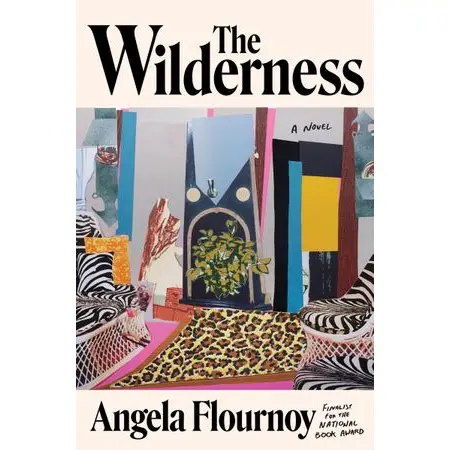
Dive into 'The Wilderness,' a novel by Angela Flournoy, that captures the complexities of family and the wilderness of personal growth. Perfect for readers who crave engaging characters and thought-provoking themes.
Compelling narrative with rich character development.
Insightful exploration of family dynamics and resilience.
Engages readers with its vivid and imaginative storytelling.
One of Barack Obama's "Favorite Books of the Year"
Named a Best of the Year by The New Yorker, The Boston Globe, Publishers Weekly, Vogue, Elle, Time, Kirkus Reviews, Electric Literature, Town & Country, Alta Journal, NPR, New York Public Library, Chicago Public Library, Book Riot, Audible
"Flournoy has delivered a future classic—the kind of novel that generations to come will read to understand the nuances and peculiarities of this time." — Harper's Bazaar
An era-defining novel about five Black women over the course of their twenty-year friendship, as they move through the dizzying and sometimes precarious period between young adulthood and midlife—in the much-anticipated second book from National Book Award finalist Angela Flournoy.
Desiree, January, Monique, and Nakia are in their early twenties and at the beginning. Of their careers, of marriage, of motherhood, and of big-city lives in New York and Los Angeles. Together, they are finding their way through the wilderness, that period of life when the reality of contemporary adulthood—overwhelming, mysterious, and full of freedom and consequences—swoops in and stays.
Desiree is estranged from her sister Danielle, and the two nurse bitter family wounds in different ways. January’s got a relationship with a “good” man she feels ambivalent about, even after her surprise pregnancy. Monique, a librarian and aspiring blogger, finds unexpected online fame after calling out the university where she works for its plans to whitewash fraught history. And Nakia is trying to get her restaurant off the ground, without relying on the largesse of her upper middle-class family who wonder aloud if she should be doing something better with her life.
As these friends move from the late 2000’s into the late 2020’s, from young adults to grown women, they must figure out what they mean to one another—amid political upheaval, economic and environmental instability, and the increasing volatility of modern American life.
The Wilderness is Angela Flournoy’s masterful and kaleidoscopic follow-up to her critically acclaimed debut The Turner House. A generational talent, she captures with disarming wit and electric language how the most profound connections over a lifetime can lie in the tangled, uncertain thicket of friendship.
